
The short version
Companies had no control over hotel spend, and the same room cost different amounts across suppliers.
One platform with team roles, spend limits and approvals, powered by our own multi-provider hotel data pipeline.
Travellers see one clean list with the cheapest price, and managers stay in control without the back-and-forth.
Every trip is a purchase nobody is watching
Companies send people to conferences, client meetings and offsites all year. Each hotel stay is a small buying decision, and most businesses make it with no shared rules and no shared view.
- 1No guardrailsSpend policy lives in a document. Overspend is found after the invoice arrives, not before the booking.
- 2Scattered bookingEmployees book wherever they like, so finance has no single place to see or approve travel.
- 3Inconsistent pricesThe same hotel on the same night is priced differently by different suppliers, and nobody has time to check them all.
Best set out to fix this for US companies. We built the product with them, from the first search screen to the back-office tools.
One trip, start to finish
The easiest way to see how Best works is to follow a single booking: a team member heading to a conference in New York.
- 1Search
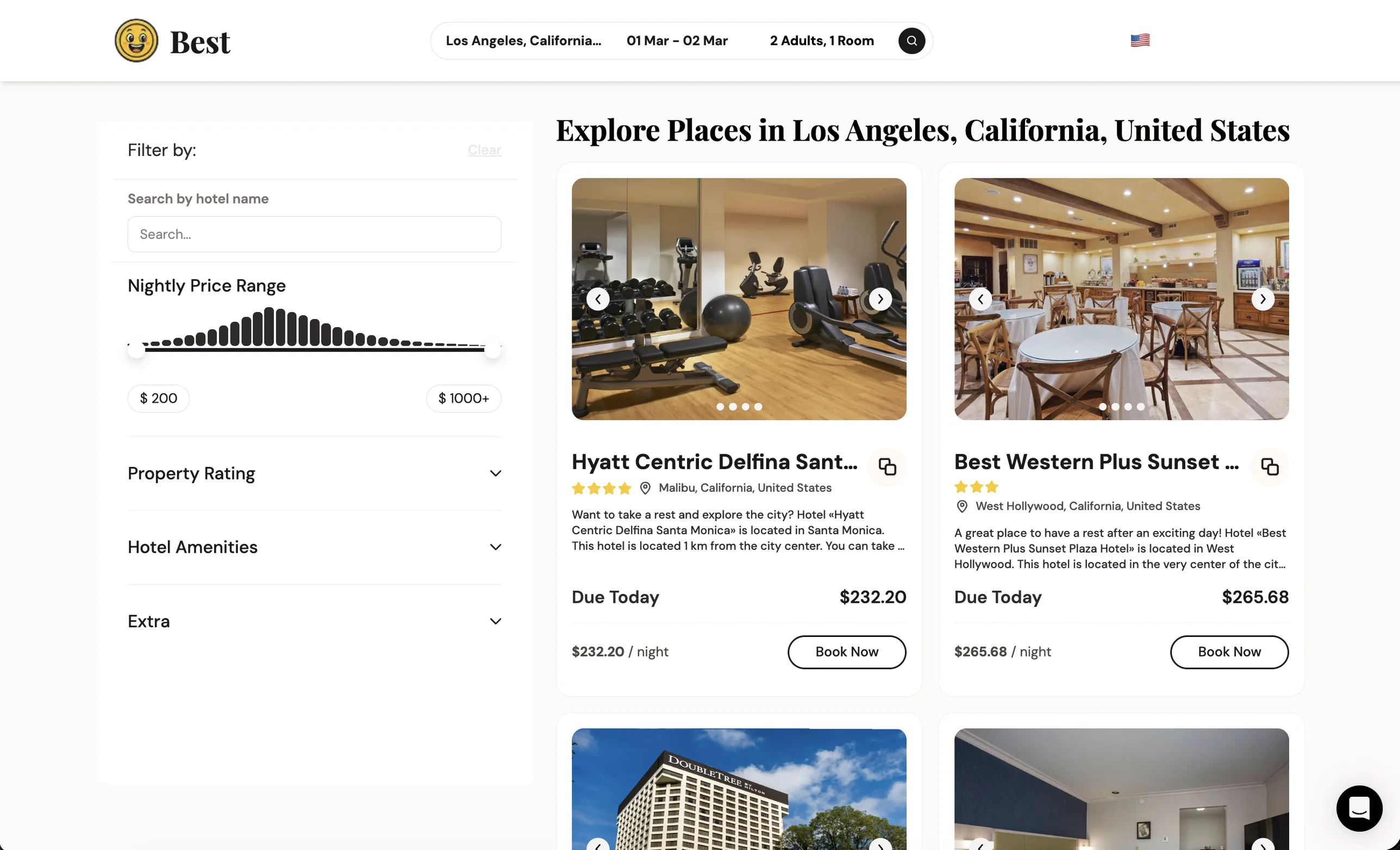
They enter the city and dates and get one list of hotels, not four overlapping ones.
- 2Compare
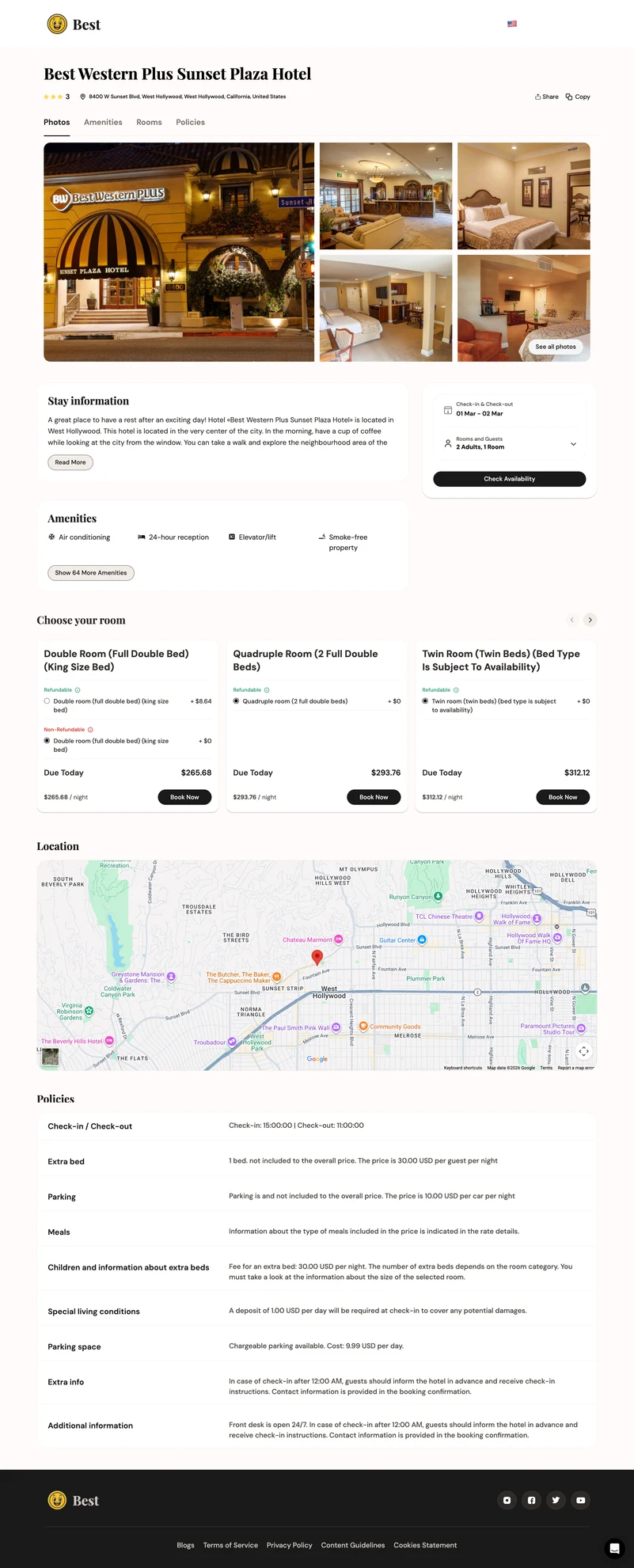
Every hotel shows the lowest rate the platform could find, with the company's policy already applied.
- 3Request approval when needed
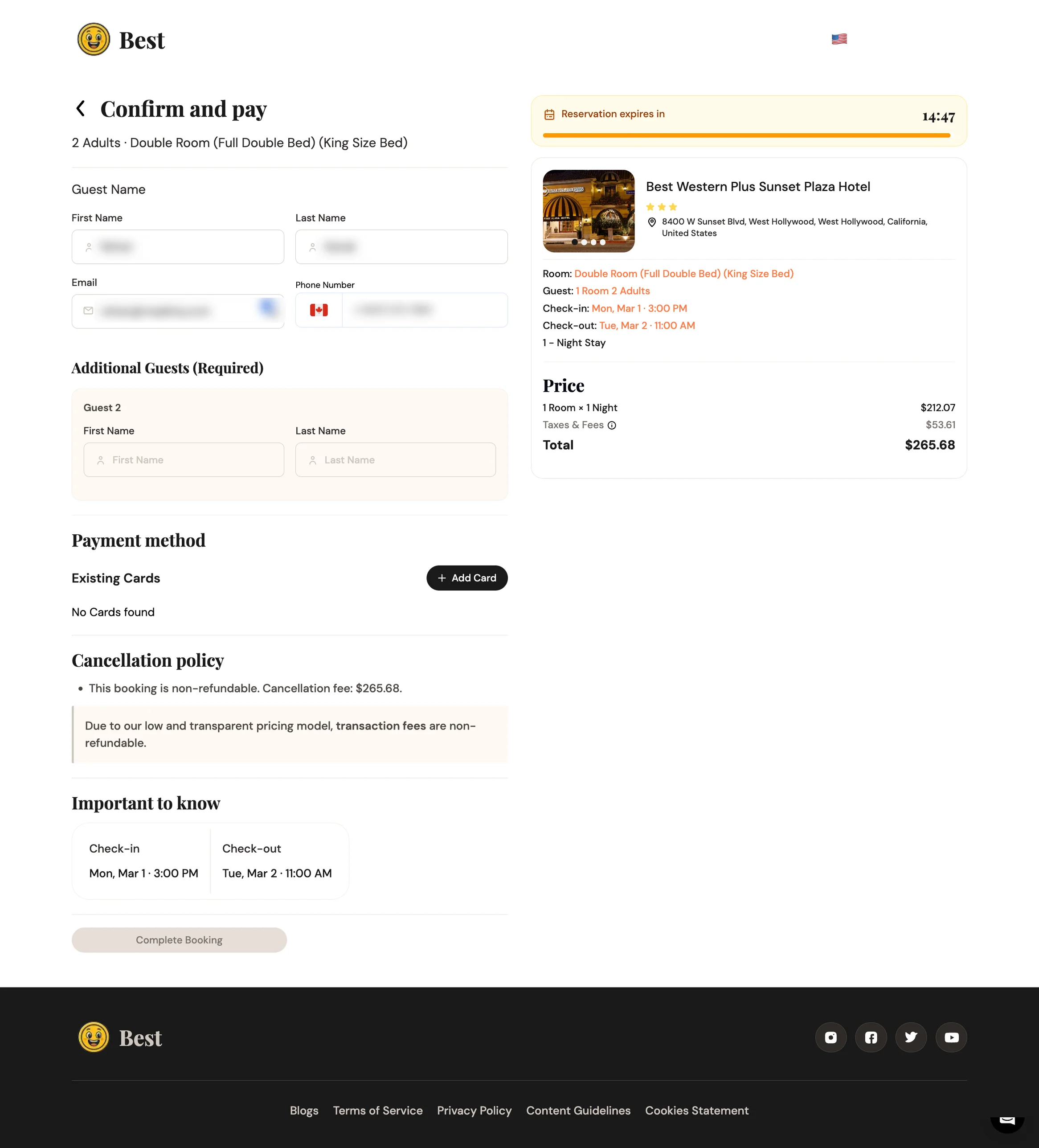
If a choice crosses their threshold, they ask their manager from the same screen instead of hitting a dead end.
- 4Manager approves
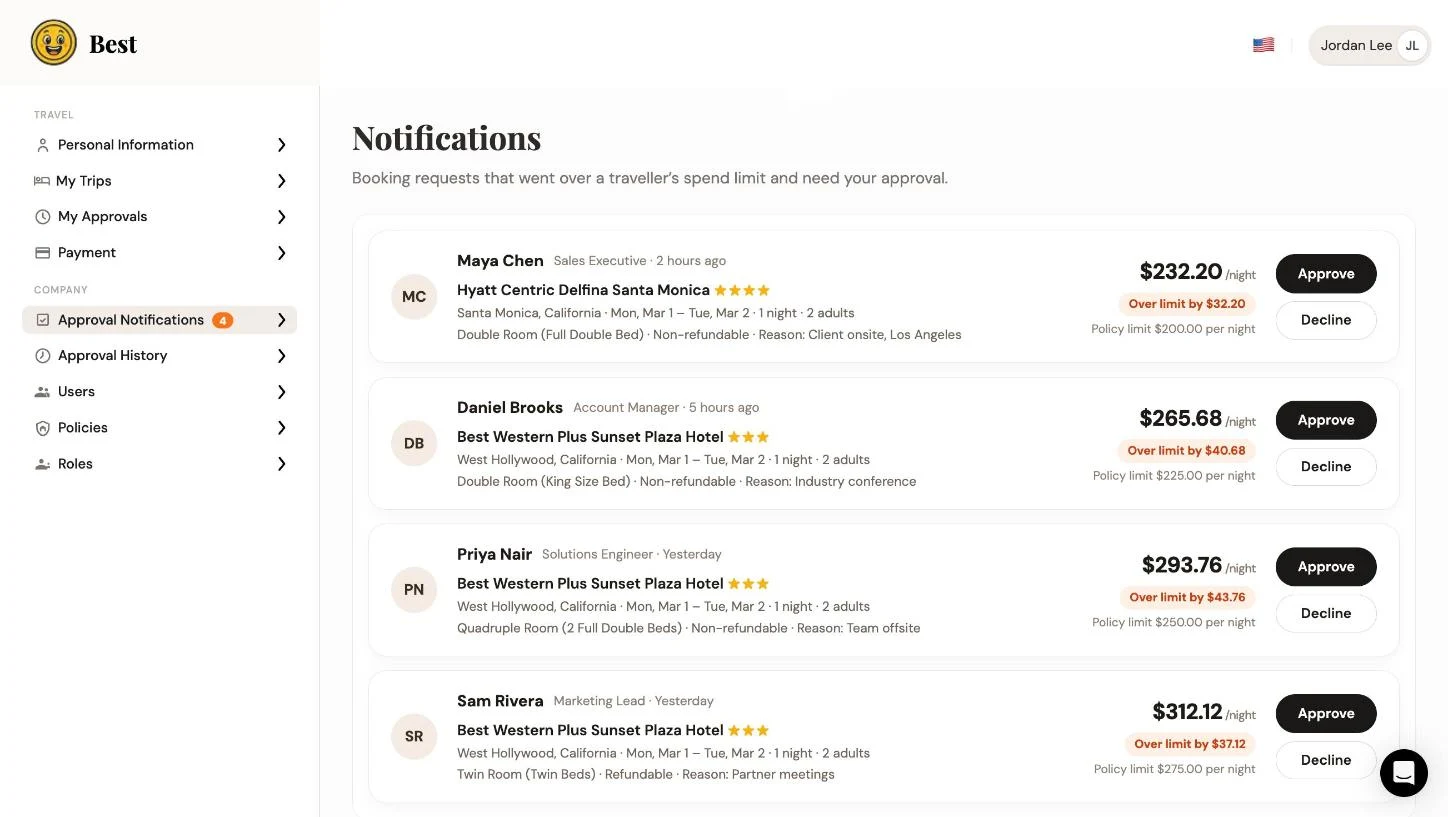
The spend manager reviews the request and approves it in a click.
- 5Booked
The hotel is booked for the traveller. No emails, no spreadsheets.
Over the limit does not mean blocked. It means routed to the right person.
Teams, roles and spend limits
A company creates an account, adds its team and sets the rules once. After that, the product enforces them on every search and every booking.
| Role | Can do | Spend control |
|---|---|---|
| Executive | Book travel for themselves and see company travel. | Their own limit |
| Spend manager | Review and approve requests that go over a limit. | Approves exceptions |
| Traveller | Search and book, or request approval. | A set limit per traveller |
On the web and on mobile
Travellers book from the web platform or the Best mobile app. Managers can approve a request from wherever they are, so a pending trip never waits for someone to get back to a desk.
The engineering challenge: four feeds, one cheapest price
The hard part of Best is not the booking flow. It is turning several overlapping, inconsistent hotel feeds into one list that is trustworthy and cheaper than any single source.
The data pipeline
Deduplication, in one picture
Providers describe the same hotel with different names, addresses and ids. Without matching, a traveller would see the same property several times, at several prices.
Illustrative example. Hotel names and prices are made up to show the idea.
What we built, step by step
Data from 4+ providers is pulled and loaded into our own database, so search runs on data we control.
Each provider's format is mapped into one consistent catalogue the platform can rely on.
We built our own pipeline to recognise when different listings are the same property.
With each hotel matched across providers, we compare rates and show the lowest one available.
An admin portal to run the business
Behind the product we built an internal portal, so the Best team can operate the platform with confidence.
Review and manage bookings across all customer companies in one place.
Screen for suspicious bookings before they become a problem.
See how bookings and spend are trending, without exporting to a spreadsheet.
See it in the product
What changed for Best's customers
Spend control
Spend limits used to live in a policy document that few people read, so overspend only showed up when the invoice arrived. In Best, the limit is part of the booking itself. A stay that goes over a traveller's limit is routed to their manager before it is made.
Pricing
The same hotel on the same night was priced differently by different suppliers, and nobody had the time to check them all. Best does that comparison in the background. Hotels from 4+ providers are merged into one list, and each one shows the cheapest rate available.
Booking
Employees used to book on whichever site they liked, so there was no single place to see company travel. Now the whole team books on one platform, with roles for executives, spend managers and travellers.
Approvals
Approval requests used to travel by email and chat. Now the traveller asks from the booking screen, the spend manager approves it in the product, and the hotel is booked.
Messy data, many suppliers, one product to ship?
We design and build the whole thing: the product, the data pipeline behind it and the tools your team needs to run it.